A bumble bee in flight over long grass

Bioteams

High Performing Teams and Improved Collaboration through Biomimicry

Topic

High Performing Teams

52 articles.

Bioteams blog relaunches with free download of The Bioteaming Manifesto

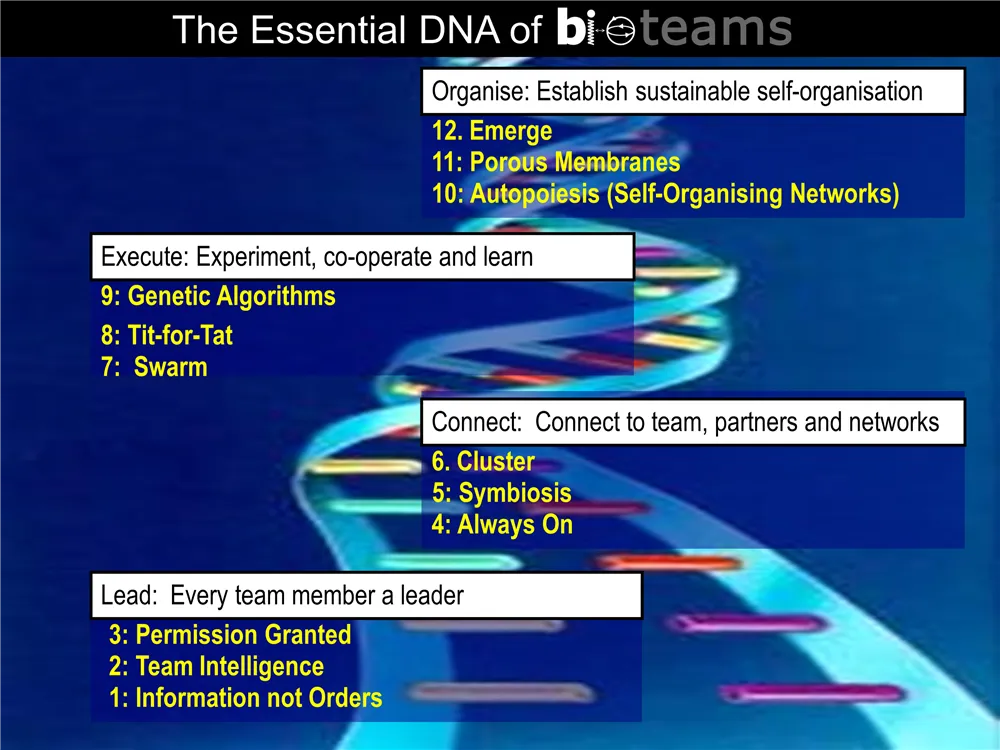
The Essential DNA of Bioteams: a DNA helix labelled with four zones — Lead, Connect, Execute and Organise — each listing three of the twelve bioteam rules, from 'Information not Orders' through to 'Emerge'.

This blog focusses on the bioteams concept – more effective teams based on nature’s proven models. If you would like a detailed overview of bioteams you can request a free copy of the 33-page Bioteaming Manifesto here.

The Bioteaming Manifesto has been downloaded 20,000 times over the last 15 years and is a very popular resource for anyone interested in the important discipline of developing and sustaining High Performing Teams.

Bioteams is structured around 4 levels of team maturity (“zones”) each of which operate around 3 guiding principles (“rules”) as shown in the diagram.

Continue readingBioteams blog relaunches with free download of The Bioteaming Manifesto

Nurturing And Motivating Virtual Teams In Uncertain Environments

The world is currently facing new challenges and the impacts of potential global pandemics are shaking fundamental working paradigms that contributed to and engineered economic success in the past. Companies are being forced to look at ways to support their workers through virtual technologies that foster remote working and collaborative project engagements in distributed, non physical environments. The problem is that the future of work is not easily comprehensible or transmissible amidst the ranks of leadership teams and identifying how an organisations productivity, employee engagement, cultural diversity and unity is improved in virtual settings forms part of the resistance against moving to a complete virtual team model – despite its benefits. With the Bioteaming manifesto now reaching fifteen years since conception, it is now relevant to revisit what fundamental elements makes virtual communities and distributed teams sustainable and committed to cohesion and success.

Continue readingNurturing And Motivating Virtual Teams In Uncertain Environments

Collective Intelligence For Teams Inspired From Nature

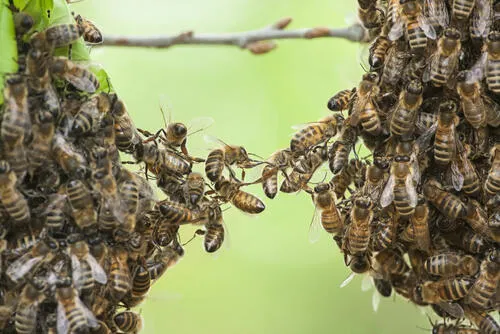
Two swarms of bees meeting from opposite ends of a twig.

Whilst it’s true that the rise Artificial Intelligence threatens industries and jobs alike, it also presents an opportunity for humans and teams to embrace the new paradigm by staying one step ahead and making themselves smarter and more capable in harnessing collective intelligence. The term collective intelligence refers to the resulting knowledge or wisdom that ensues when many agents or individuals are involved in a group and where this type of ‘intelligence’ cannot exist through an individual endeavour. It is therefore important that in the face of tectonic shifts in technology and the rise of intelligent machines coupled with the threat of automation; teams and humans embrace a form of ‘swarming’ in order to not only future proof themselves but create the right type of environment to achieve outcomes that could not be reached through individual pursuits. In this article, I refer to various examples of how Nature’s team achieve this ‘swarm intelligence’ and appropriate how these can be achieved in the organisational setting through Bioteaming.

Continue readingCollective Intelligence For Teams Inspired From Nature

Customer Intelligence and Teamwork Drive Innovation

A large flock of birds flying in loose formation across a bright sky.

Innovation happens in many places and has many faces. Enterprises are required to nurture internal processes that work in sync like ecosystems to encourage front line intelligence to feed ideas through to management so that services, products, processes and teamwork ensues collaboratively to deliver benefits to the Value Chain. This requires effective team work and a supporting methodology that aims to treat your team more like an agile soccer team if you think about it so that anyone can effectively take control of the ball and score the goal.

In the book “Competing Against Luck: The Story of Innovation and Customer Choice” by Harvard Business School professor Clayton Christensen; the core concept of the “Job To Be Done” theory is introduced which is hugely relevant for enterprises wanting to leverage collaborative team work in creating value. The theory stresses that in order to drive organisational product, service and process excellence; we need to focus on alleviating the forces of anxiety, inertia, substitution and resistance across both the customer and employee value chain. Christensen articulates a mechanism to achieve this by firstly creating “specs” that define what outcomes and values are required in order to lead to customers or employees firing old methods, solutions, products and services and adopting new ones. In doing so, the product development team (as an example of a department vested with solving consumer problems) will be satisfied as they have induced consumer adoption either by bringing non-consumption into consuming contexts or working on incremental product and service innovation. Christensen states that “The circumstance is fundamental to defining the job (and finding a solution for it), because the nature of the progress desired will always be strongly influenced by the circumstance”.
This is important as traditionally, managers usually follow one of four primary organising principals in their innovation quest (or some composite therefore) being product attributes, customer characteristics, trends and/or competitive response. The challenge here is that these are not bad or wrong but they are essentially sampling of the most common and are insufficient and therefore not predictive of customer behaviours. In this article, I allude to how the Bioteaming action rules across the Organization, Execution and Connectivity Zone facilitates the dynamics required to solve the ‘job to be done’.

Continue readingCustomer Intelligence and Teamwork Drive Innovation

How To Optimise Team Size In Uncertain Environments

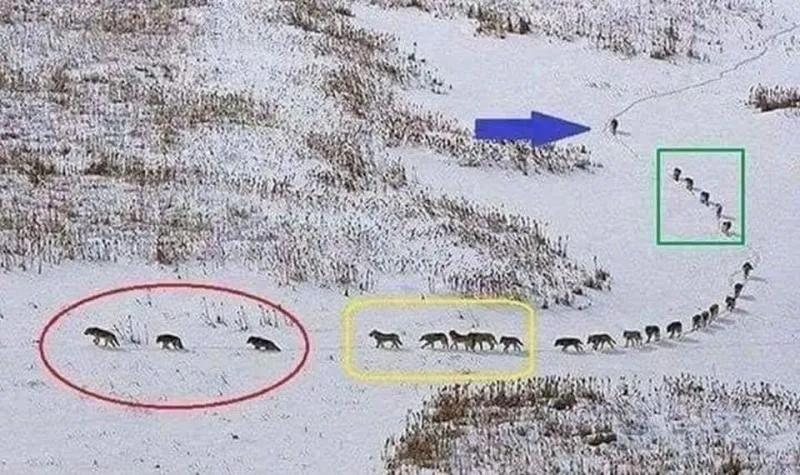
An aerial photograph of a wolf pack crossing snow in single file, with coloured annotations grouping the three animals at the front, the four behind them and a small group at the rear, and an arrow marking the direction of travel.

Image Source: Wolf Pack Explains ‘Alpha’ Behavior

The law of requisite variety (a term originally rooted as the first law of cybernetics) states that “If a system is to be stable, the number of states of its control mechanism must be greater than or equal to the number of states in the system being controlled” . In enterprise contexts, this means that that teams and organisations need to nurture their ability to handle dynamic and complex changes stemming from the external environment and have enough structured capacity to react with collective resources in the face of these stimuli so as to not fail and become a ‘un-viable system’.

Continue readingHow To Optimise Team Size In Uncertain Environments

How good a team leader are you? Try my Team Leadership Assessment!

As a team leader you have two distinct leadership responsibilities – Managing the Individuals and Managing the Team. Leaders who fixate on managing the individuals tend to have happy teams which unfortunately under-perform in terms of deadlines, quality, customer satisfaction and budgets! Leaders who obsess on managing the team may hit most of these targets but at the expense of team member Alienation, Burnout, Compliance, Disinterest and eventually Exiting (easy to remember – ABCDE!). Great Team Leaders manage both responsibilities. Here is a simple framework with a nice supporting spreadsheet to help you assess and improve your leadership:

Continue readingHow good a team leader are you? Try my Team Leadership Assessment!

Free High Performing Teams Instant Healthcheck Tool Spreadsheet

An important free tool which I provide with my new book ‘A Systematic Guide to High Performing Teams‘ is a Team Process Health Check Spreadsheet written in Microsoft Excel. The spreadsheet allows you to rapidly assess each of 16 important team process elements on a scale of 0-3 ranging from ‘totally absent’ to ‘present and effective’.

Continue readingFree High Performing Teams Instant Healthcheck Tool Spreadsheet

The evolution of effective team working and how you can accelerate it!

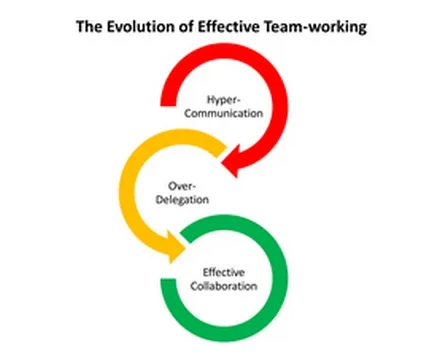
The evolution of effective team working, drawn as three linked circular arrows: hyper-communication, then over-delegation, then effective collaboration.

By observing newly formed and existing teams playing business simulations I have learned some important insights into how team-working ‘evolves’ and offer here some specific ideas on how you might accelerate this evolution in your own organizational teams.
On the road to Effective Team Collaboration there seems to be two intermediate phases of ‘naïve collaboration’ which many teams seem to go through – Hyper-Communication and Over-Delegation.

Continue readingThe evolution of effective team working and how you can accelerate it!

Top teams understand the 4 different types of Teamwork in Nature

What do we mean by “Teamwork”? We often talk about Teamwork as if its a singular thing however in nature there are 4 different types – each of which have a very precise meaning. I call these Solowork, Crowdwork, Groupwork and Teamwork itself. An effective team knows how and when to use each type – an ineffective team only uses one!

Continue readingTop teams understand the 4 different types of Teamwork in Nature

What’s the difference between a promise and a responsibility?

In the recent UK floods we heard a lot about defences failing and phrases being bandied about by engineers and managers such as “a once in a hundred years” event and “could never have been envisaged.” However when I hear these types of explanations it always makes me think instead of the crucial differences between a promise, a responsibility and a guarantee.

Continue readingWhat’s the difference between a promise and a responsibility?