A bumble bee in flight over long grass

Bioteams

High Performing Teams and Improved Collaboration through Biomimicry

Month

October 2019

2 articles published this month.

Competition and Collaboration Creates High Performing Teams
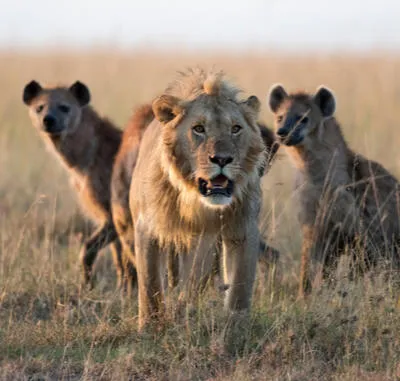
A lion walking through dry grass flanked by two hyenas.


Many of us have heard the story about the classical race between the tortoise and hare but did you know that there is a version 2.0 of that metaphor? In essence, there was a re-match as the rabbit wanted to prove that being the fastest and ergonomically conducive animal, it would win the second race. Here, the tortoise was obviously left behind but the hare came to a major roadblock in their race track i.e. the bank of a river. How could it possibly transcend this obstacle when it has no mechanics to swim and isn’t designed by Nature to even glide over water? The tortoise eventually caught up and in seeing the hare; offered to carry the hare on its back so that they could both cross the river bank and reach the finish line together!
Continue readingCompetition and Collaboration Creates High Performing Teams

How To Optimise Team Size In Uncertain Environments

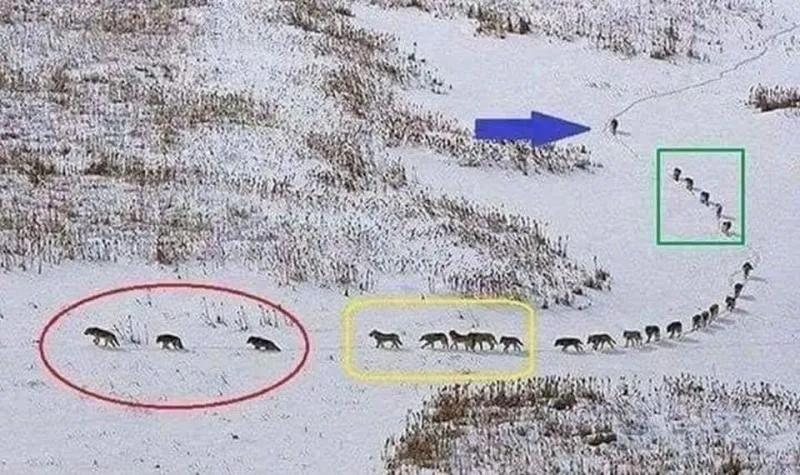
An aerial photograph of a wolf pack crossing snow in single file, with coloured annotations grouping the three animals at the front, the four behind them and a small group at the rear, and an arrow marking the direction of travel.

Image Source: Wolf Pack Explains ‘Alpha’ Behavior

The law of requisite variety (a term originally rooted as the first law of cybernetics) states that “If a system is to be stable, the number of states of its control mechanism must be greater than or equal to the number of states in the system being controlled” . In enterprise contexts, this means that that teams and organisations need to nurture their ability to handle dynamic and complex changes stemming from the external environment and have enough structured capacity to react with collective resources in the face of these stimuli so as to not fail and become a ‘un-viable system’.

Continue readingHow To Optimise Team Size In Uncertain Environments